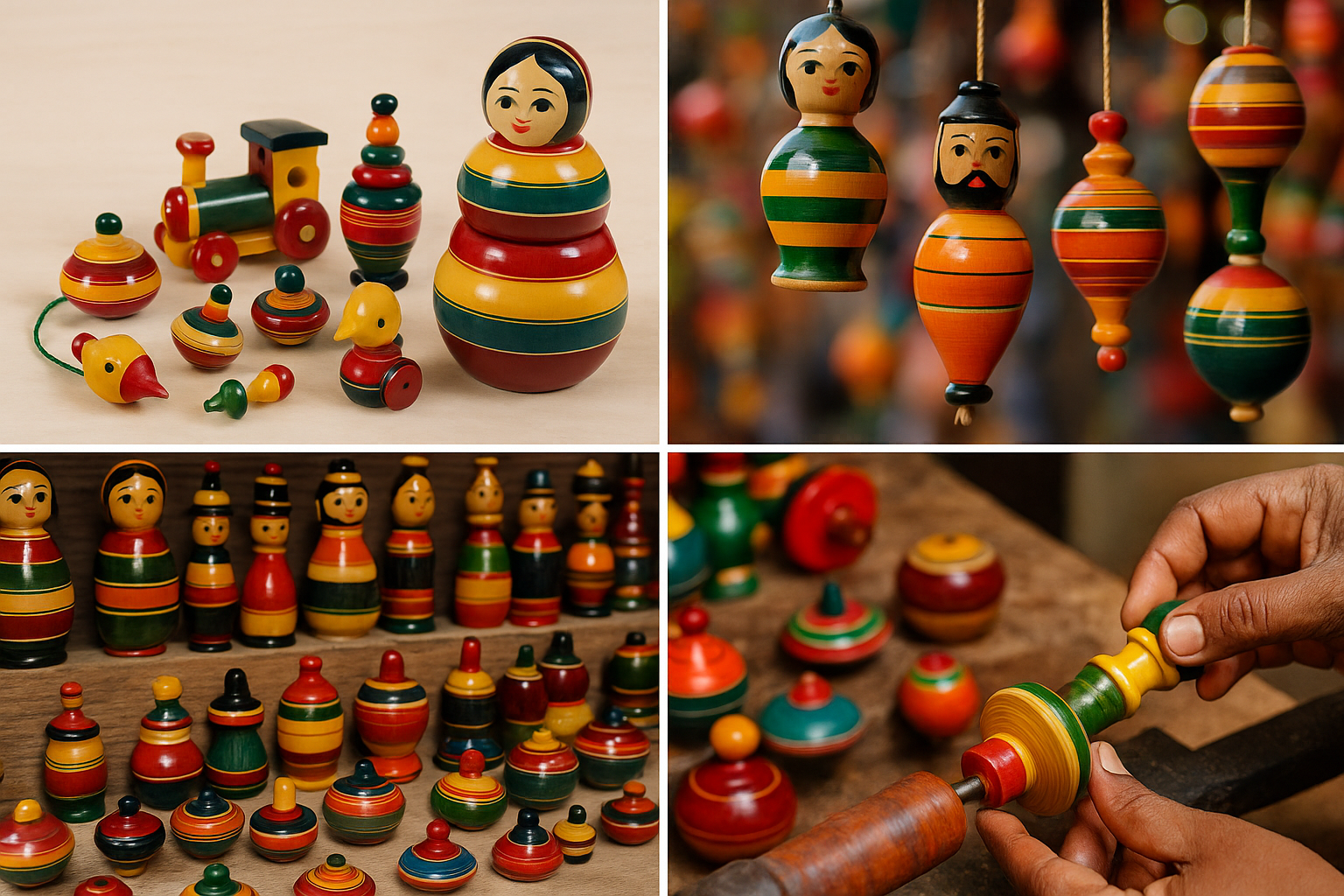
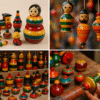
Tucked between Bengaluru and Mysuru in the Ramanagara district of Karnataka lies a small town with a big reputation: Channapatna — often called Gombegala Ooru, meaning “toy-town.” Here, generations of artisans have turned wood into colourful, lacquered toys and decorative pieces. These toys are more than playthings: they are a living tradition, a source of livelihood, and an example of sustainable craft.
A Glimpse into History
The craft of making wooden toys in this region is over 200 years old.
The rise in prominence of Channapatna toys is often linked to Tipu Sultan, the ruler of Mysore in the late 18th century. He is believed to have patronised the craft and encouraged artisans in woodwork.
Some accounts say Tipu Sultan invited artisans from Persia to train the locals—thus infusing foreign lacquer and toy-making techniques into the local traditions.
A key figure often called the “father of Channapatna toys” is Bavas Miyan, who is credited with introducing techniques (including lac turnery methods) that improved efficiency and design detail.
Over time, what began as small home-based workshops expanded modestly. Yet, the core of the craft remained based in local, artisanal setups, not large factories.
Because of its heritage and uniqueness, Channapatna toys finally earned a Geographical Indication (GI) tag in 2005. This helps protect the identity of the craft and ensures that toys sold under the name “Channapatna” truly come from the region and follow traditional standards.
Where It’s Made
Channapatna is located in the Ramanagara district, Karnataka, roughly between Bengaluru and Mysuru.
The lion’s share of production happens in small workshops, many within artisans’ homes or nearby outbuildings.
The Lacquerware Crafts Complex in Channapatna, by the Karnataka State Handicrafts Development Corporation (KSHDCL), is a centralized facility where multiple artisans can access power lathes, shared infrastructure, and marketing support.
In recent years, many social enterprises and design-led initiatives (for example, the brand Varnam) have collaborated with Channapatna artisans to reinvent product lines, making them relevant for modern homes while preserving tradition.
How They Are Made: From Wood to Lacquered Toy
The crafting of a Channapatna toy involves several stages, blending tradition with precise technique:
Selection and Seasoning of Wood
Traditionally, wood called Aale mara (ivory wood), scientifically Wrightia tinctoria, was used.
Over time, other woods like rubber wood, teak, cedar, even rosewood in some cases, have been used, depending on availability and the desired finish.
The wood is seasoned (dried) for a period (weeks to months) so it doesn’t warp or crack later.
Turning, Shaping & Carving
The seasoned wood is shaped on a lathe (turnery) to form cylinders, cones, spheres, or other basic forms. Many Channapatna toys use rounded parts.
Further carving or detailing is done by hand to create features (e.g. faces, limbs, decorative motifs).
Colouring & Lacquering
One of the hallmarks of Channapatna toys is their lacquer finish and coloured surface. The craftspeople apply lac + dyes (often vegetable or natural) to the turned wood while it spins on the lathe.
These dyes are frequently non-toxic, natural or herbal colours, made from pigments derived from plants, fruits, etc.
After applying dye, a coat of clear lacquer is added, and then the toy is polished (sometimes using soft leaves, e.g. cactus leaf) to achieve a smooth, glossy finish.
Final Touches & Quality Check
Any additional fine detailing (small painting, trimming) is done by hand.
The toy is inspected for cracks, smoothness, uniform colour, durability, and whether edges are child-safe (rounded).
It is packaged for sale, often marketed as handmade, sustainable, and child-safe.
Related Products
What Makes Channapatna Toys Eco-Friendly & Unique
Channapatna toys are often held up as a model for sustainable, environmentally conscious craft. Here are the main features that contribute to that reputation:
Natural & Non-Toxic Materials
Use of natural dyes or vegetable pigments (rather than synthetic or chemical paints) ensures that toys are safe for children and do not release harmful chemicals.
Lacquer used is traditionally based on natural shellac or plant-based lac, making it less harmful than many synthetic varnishes.
The craft avoids plastics and synthetic coatings, making the end products biodegradable to an extent.
Sustainable Wood Use
The wood is selected and seasoned carefully to minimize waste.
Use of locally available woods reduces long supply chains and transport emissions.
Some artisans use secondary woods (less expensive, more sustainable) now that original ivory wood is harder to source.
Low-Scale, Human-Centered Production
The production is labour-intensive, artisan-based, not mass mechanised. This keeps energy consumption lower and distributes income among many craftsmen.
The workshops are often in homes or small units, not large factories, so infrastructure and energy overheads are minimal.
Child-Safe Design Philosophy
The toys are often smooth, with rounded edges, to avoid injury.
Since the colours and finishes are non-toxic, the toys are safer if children chew or mouth them (a common risk for young kids).
Cultural & Social Sustainability
The craft supports local artisans’ livelihoods, passing skills through generations.
It encourages preservation of traditional knowledge and handicraft culture in an era of industrial homogenisation.
By having a GI tag and social enterprise collaborations, the craft gets more visibility, helping it resist being replaced by cheap plastic toys.
Uses & Appeal
Channapatna toys are not just for children; they find value in many domains:
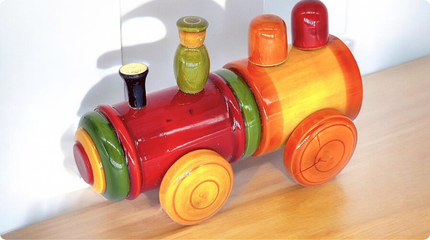
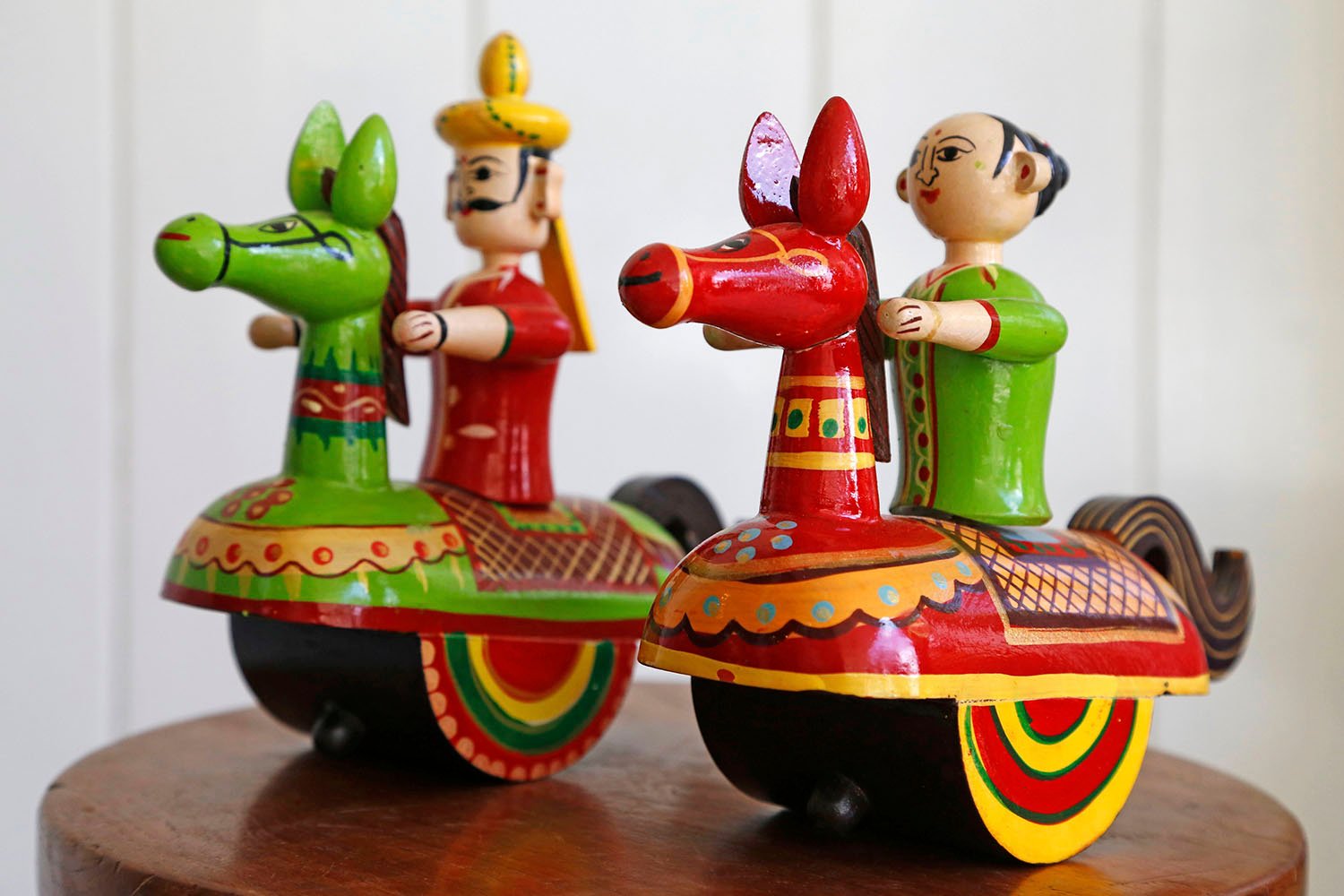
Toys & Playthings: Pull-along toys, spinning tops, stacking toys, rattle toys, vehicles, puzzles — these are made for use by children.
Decor & Homeware: Because of their beautiful finishes and traditional charm, many pieces are used as decor — dolls, showpieces, wooden boxes, lamps, etc.
Gifts & Souvenirs: They make meaningful, culturally rooted gifts.
Educational & Montessori Use: Simple shapes, colorful forms, and tactile experience make them suitable for early learning frameworks.
Collectibles & Art Objects: Some specialized or designer pieces are collected by enthusiasts of folk art.
Challenges & the Road Ahead
While the craft has endured, it faces a few challenges:
Competition from cheap mass-produced plastic toys and non-traditional materials.
Difficulty in sourcing traditional wood and natural dyes consistently.
Younger generations sometimes less interested in taking up labourious crafts.
Marketing, distribution, and scale constraints, especially in reaching global audiences.
The craft’s dependence on intermediate agents or middlemen can reduce profits for artisans.
Nonetheless, many initiatives are working to revitalize and modernize the craft — for example, design collaborations, e-commerce platforms, branding, and capacity building for artisans.
Conclusion
Channapatna toys encapsulate the magic of Indian handicrafts — simple materials transformed by skill, tradition, and care into objects of beauty and utility. Their rich history, rooted in royal patronage and artisan creativity, continues to evolve in today’s world. Their eco-friendly nature, use of natural dyes, and sustainable practices make them more relevant than ever, especially as consumers seek healthier, more conscious alternatives to plastic goods.